
Introduction
You’ve just had a bingle. Your car has taken a hit, and the panel damage is obvious. You ring around a few repairers and assume any panel beater can sort it out after all, a dent is a dent, right?
Wrong. The material your car’s panels are made from changes everything: the tools used, the techniques required, the time it takes, and critically, whether the repair is done safely. If your repairer doesn’t know the difference between aluminium and steel, your car might look fine on the outside but have compromised structural integrity underneath.
This guide breaks down exactly what sets aluminium vs steel panel repair apart, why modern vehicles demand specialist skills, and how to make sure the accident repair centre you choose is genuinely qualified to handle your car.
Why Panel Material Matters More Than Ever
Ten years ago, most vehicles were made almost entirely from steel. It was strong, easy to weld, and every panel beater in Melbourne understood how to work with it. Today, the picture is very different.
Modern cars, particularly mid-range to premium models, now use a mix of materials to reduce weight and improve fuel efficiency. You’ll find high-strength steel (HSS), ultra-high-strength steel (UHSS), aluminium alloys, carbon fibre, and even magnesium in the same vehicle. Your Toyota RAV4’s bonnet might be aluminium, while the door sills are high-strength steel. Your Ford Ranger’s tray panels might behave completely differently from its A-pillars.
Each material requires different tools, heat tolerances, welding processes, and filler approaches. A repairer trained only on traditional mild steel simply cannot safely repair modern mixed-material vehicles, no matter how long they’ve been in the trade.
Steel Panel Repair: The Traditional Standard
Steel has been the default car body material for over a century. It’s heavy, but it’s predictable. When mild steel takes a hit, it deforms in a fairly controlled way. A skilled panel beater can reshape it using heat, hammers, and dollies techniques that have been refined over decades.
The advantages of steel for repairers are significant. It is easy to weld; you can MIG or TIG it with almost no chance of contamination. It tolerates heat better during reshaping. And when body filler is applied, it bonds well to the surface.
However, even steel repair has evolved. High-strength and ultra-high-strength steels, now common in door reinforcements, pillars, and structural rails, cannot be reshaped with heat the way mild steel can. Applying heat to UHSS destroys its engineered strength. They often have to be changed instead of being beaten back into shape, even if the damage only looks moderate.
This is why experienced auto body repair specialists always consult manufacturer repair specifications before touching any structural component.
Aluminium Panel Repair: A Different World
Aluminium is now used in bonnets, doors, boot lids, and even full body structures on vehicles such as the Ford F-150, Jaguar XE, Audi A8, and many Tesla models. Its appeal is clear: it weighs about a third as much as equivalent steel, improving performance and fuel economy.
But for repairers, aluminium presents a completely different set of challenges:
- Aluminium has a memory. Unlike steel, which can be re-worked repeatedly, aluminium work-hardens as it’s manipulated. Strike it once, and the area around the repair becomes stiffer and more brittle. Push too far and the metal tears.
- Aluminium cannot tolerate contamination. Steel particles from grinders, welders, or tools used on steel will cause galvanic corrosion if they contact aluminium panels. Repairers must use dedicated aluminium-only tools, never shared with steel.
- Welding aluminium requires specialist equipment. Standard MIG welders can’t properly handle aluminium. Specialist TIG welders and often riveting or bonding techniques are required instead.
- Heat management is critical. Aluminium conducts heat much faster than steel and has a narrow operating temperature range. Overheat it, and you’ll cause warping or invisible internal cracking.
- Straightening techniques differ entirely. The hammer-and-dolly method that is used on steel will damage metal. Specialist tools like stud welders, slide hammers, and induction heaters are required.
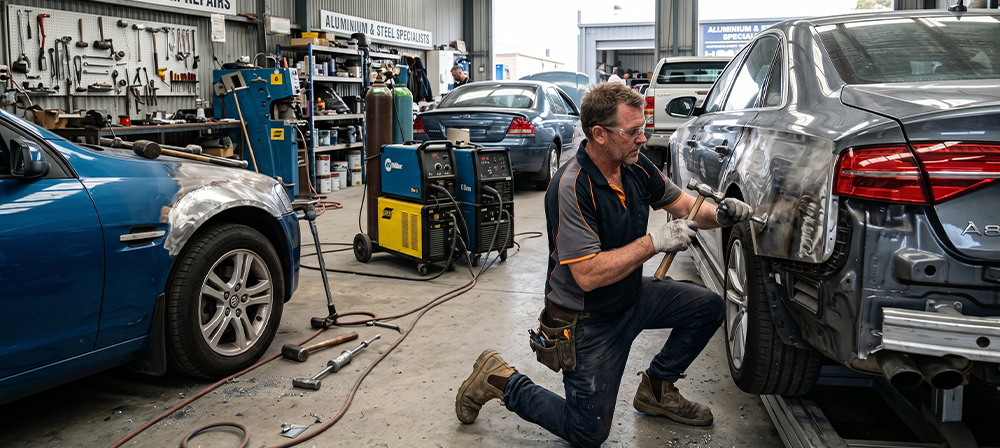
At Colonial Collision Centre, our team is trained and equipped to handle advanced smash repairs on both steel and aluminium. We maintain separate workspaces and dedicated tools for each material because cutting corners here compromises your safety.
Need a Quote First?
Not sure what material your panels are made from? Our specialists assess your vehicle and give you a transparent, obligation-free estimate.
How to Know What Your Car Is Made From
You do not require to be a mechanic to figure this out. Here are three quick ways:
- Check your owner’s manual. Most modern vehicles include a material guide for body panels.
- Look for the build plate in the engine bay or door jamb. Reputable manufacturers include repair specification summaries.
- Bring it to us, our panel beaters in Melbourne team will inspect your vehicle and identify all materials involved before any work begins.
In general, if your car was manufactured after 2015 and is a mid-range or premium model, assume some aluminium is present until proven otherwise.
Why You Need Auto Body Repair Specialists, Not Just Any Panel Beater
The stakes here go beyond cosmetics. A poorly repaired structural panel can fail in a subsequent accident, meaning the crumple zones and safety structures don’t perform as engineered. In Australia, vehicle manufacturers publish strict repair procedures, and insurance-approved repairers are generally required to follow them.
When choosing an accident repair centre, ask these questions:
- Are your technicians trained in aluminium repair?
- Do you have separate aluminium-dedicated tools and workspaces?
- Do you follow manufacturer repair specifications?
- Are you I-CAR trained or hold equivalent certifications?
- Can you handle my specific make and model?
Colonial Collision Centre is a full-service, I-CAR-aligned accident repair centre in Brooklyn, servicing the western suburbs of Melbourne, including Altona, Laverton, Yarraville, and beyond. We’ve invested in the equipment and training necessary to handle modern vehicles correctly, not just quickly.
Get Your Vehicle Assessed by Specialists
Whether your car is steel, aluminium, or a mix of both, our panel beaters in Melbourne team will identify the right repair process and give you a clear, honest quote.
Conclusion
The gap between steel and aluminium panel repair isn’t a minor technical detail; it’s the difference between a safe repair and a liability. As modern vehicles become increasingly complex in their construction, the standard expected of accident repair centres rises accordingly.
At Colonial Collision Centre, we’ve built our workshop around this reality. With 30+ years of experience and continuous investment in modern techniques and equipment, we handle everything from minor panel dents to advanced smash repairs on today’s mixed-material vehicles correctly, for the first time.
Frequently Asked Questions
Can any panel beater repair aluminium panels?
Repairing aluminium requires specialist training, dedicated tools, and a separate workspace away from steel. A repairer without these capabilities can cause invisible damage, including internal cracking that compromises your vehicle’s safety. Always confirm your repairer’s aluminium credentials before proceeding.
Does aluminium repair cost more than steel repair?
Generally, yes. Aluminium requires specialist equipment, takes longer to work correctly, and often uses bonding or riveting rather than traditional welding. However, the cost reflects the genuine complexity of the repair. A cheaper quote from an unqualified repairer may cost you far more in the long run, or worse, put you at risk on the road.
Will my insurance cover aluminium panel repairs?
Most comprehensive car insurance policies cover aluminium panel repairs the same way they cover steel. That said, coverage depends on your specific policy — check your PDS or call your insurer to confirm. Your repairer should always follow manufacturer repair specifications, as insurers can dispute claims where non-approved methods were used.
How do I know if my car has aluminium panels?
The quickest method is a strong magnet. Aluminium is not magnetic so that a magnet won’t stick. You can also check your owner’s manual or ask your repairer to inspect. Vehicles from Audi, BMW, Ford (F-150 and newer Rangers), Tesla, Jaguar, Land Rover, and many others use aluminium extensively in their modern lineups.
Can a damaged aluminium panel be repaired, or does it always need to be replaced?
It depends on how bad the damage is. Specialised aluminium dent-pulling tools and induction heating can often fix small dents that don’t cause folds or tears. Most of the time, panels with deep creases, tears, or structural damage need to be replaced. Trying to fix them could reveal hidden micro-fractures. Our technicians look at each case on its own and always suggest the safest and most affordable option.
One Response
That was amazing